
Media careers guide

How to become a film or video editor

As a video editor you’ll take the raw ingredients of sound and image. You’ll mix them together in your editing suite and cook them up into an unforgettable final product for film, TV and online productions.

Junior Film Editor Aiysha shares life skills she has found useful in her job...

How much money can you earn as a film or video editor?

Average salary for film editor jobs

These LMI Job Trends give you a sneak peek of how much you could earn starting out for media, TV, and film editing careers, and how much your salary could grow with experience.

Recent labour market information says you can earn between £18,000 and £50,000 a year as a TV, video, or film editor.

Your starting salary as a film editor can vary because of factors like level of experience, training, or location. It will increase over time as you build skills, knowledge and experience.

DID YOU KNOW: You can progress into lots of different specialisms or career trajectories with your film editing skills. You could become a Studio Manager or Head of Studio. You could also choose to specialise in different media, like animation.

"My Career Journey"

Young people at Mediorite share their media career tips and routes into the biz in these career Q&As.

MATTHEW: From MEDIA APPRENTICESHIP to Senior FILM EDITOR at age 23

Matthew started out with a media production apprenticeship with Mediorite. Just a few years later he’s a Senior Editor specialising in animation and leading a team of four junior editors… at the age of 23!

AIYSHA: From MEDIA APPRENTICESHIP to Junior FILM EDITOR

Aiysha Shahid is a Junior Film Editor for video production company Mediorite! She chats through what’s involved in her work as a film and video editor, and how she got into this role via the apprenticeship route.

ELEANOR: From editing traineeship to Assistant PRODUCTION with Netflix & Apple TV+

Find out how Eleanor graduated from Mediorite’s SHIFT film production training course, then found her career path and a job at Netflix. UPDATE: As of November 2024, Eleanor is Second Assistant Editor at Apple TV+.

Eleanor Mance-Moran a film industry professional who graduated from Mediorite's SHIFT programme

AVA: From media graduate to Junior PRODUCER with a mission to represent culture

Mediorite’s Junior Producer / Director Ava Majumdar talks about her career path and creative focus on identity and diversity in film.

ava-majumdar-feature-image

LEANNE: Freelance CAMERA OPERATOR

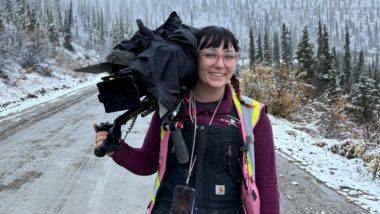
Leanne Rogers is a Freelance Shooting Assistant Producer. She’s also a Freelance Camera Operator for video production company Mediorite! Leanne chats through what’s involved in her work as a camera op, and how she got into this role.

Camera operator woman in snow

IBBY: From MEDIA APPRENTICESHIP to JUNIOR EDITOR

Ibby did a media apprenticeship with video production company Mediorite and is now a Junior Editor flexing his creative muscles with Adobe Suite, social channels and using AI to resolve issues like film quality and formatting. He is progressing his skills by leaning into directing, and could see himself running his own creative company one day.

Ibby Onitolo

JOSHUA: From MEDIA APPRENTICESHIP to CAMERA OPERATOR and TRAINER

After joining Mediorite with a media apprenticeship, Joshua Lamptey has progressed to become a Junior Camera Operator AND a trainer on Mediorite’s SHIFT training programme. He’s developing himself while helping other filmmakers of the future gain skills and confidence for their next steps into creative and media careers.

Joshua talking to camera

What skills does a video or film editor need?

Skills are personal strengths and qualities you might already have. You can grow them over time in whatever you do. Technical skills can also be involved, and you can develop these through media work experience, courses, or training.

Useful skills to put in your media CV

  • Problem solving skills – You’ll often find yourself coming up with solutions to challenges. Maybe you’ll discover new ways to use existing video editing packages like Premiere Pro and After Effects to achieve the effects you want. Or you might have to learn to use new software packages, which is often quite straightforward once you’ve learned how to use one or two.
  • Creativity – Video editing can be a specialist role in large companies, and an extremely varied role in smaller ones where you might do everything from co-pitching and storyboarding through to final edits. In either situation, you will get the opportunity to let your creativity shine on a daily basis.
  • Self-management and organisation – You’ll need to be really thorough and pay attention to detail. This will include anything from spotting typos in headings and transcripts to ensuring everything lines up and is cut, spliced and merged to perfection.
  • Teamwork – You’ll often work with other editors, either being line managed by Senior Editors or – once you progress – leading a team of Junior Editors. But you’ve all got the same goal – a great finished film. You’ll also be working with other professionals, from technical folk to business heads. Be good to everyone and treat everyone with the respect and courtesy you seek. People who like you will remember you, and be pleased to work with you again if the opportunity comes up.
  • Communication: Many problems in the world of film editing can be smoothed with good communication so that everyone knows what needs to happen and what’s going on. And don’t forget – a big part of your role is using your video editing skills to communicate with your audience who will be engaging with the final product!

Top tips for growing your skills

Build a network you can approach for tips and opportunities!

Set up a LinkedIn profile and start following useful media companies, as well as thought leaders in the TV, film, and creative industries.

Join forums and messageboards to gain ideas and approach for support.

Subscribe to creative career newsletters for the latest opportunities and tips.

Whenever you meet and / or work with a professional who likes you, you can add them to your LinkedIn / social networks and potentially ask them for a reference or testimonial if required one day.

Think indie and keep doing what you love! Connect with other young talents and hopefuls like yourself. Enjoy working on small indie projects as a way to build skills and confidence, and meet people in the biz. Enter your work for awards. Celebrate your achievements, no matter how small.

Start building a professional portfolio so you can showcase your work to employers.

Useful resources:

Getting work experience as a video editor

Work experience comes in many forms. It could include work shadowing a media professional, gaining a work placement, building experience through volunteering, or getting a paid internship.

Research TV networks, film production companies, and film festivals or events in your area. They could all potentially be offering work experience opportunities. Be aware that there will be stiff competition for work placements with big broadcasting companies like the BBC. However, Channel 4 offer a year-round modular virtual work experience for ages 14+ called the 4Skills Work Experience Programme. You can also check out filming work experience online for ages 13+ with Springpod.

Here at Mediorite, we work with London schools to offer work experience placements and are based in the East End.

You can also check out The Producers Alliance for Cinema and Television (Pact) for companies who may be offering work experience, internships and opportunities like becoming a runner.

Volunteering can be a great way to build work experience. You can ask to volunteer for film industry events and festivals. With an increase in DIY vlogging and influencing, you can volunteer on friends’ projects for their social channels and hone your video editing skills on both the mobile phone and on free versions of pro video editing packages.

Volunteering is a great way to grow confidence, build media skills, and network – as is attending industry events which you can find via social channels or the likes of Eventbrite.

If you’re taking the university route, there may be chances to gain work experience on student film and TV setups. Join a relevant student society if there’s one going so you can meet like minds and get involved in student filming projects.

TOP TIP: Whenever you gain experience / training, make a note of your skills learned, qualifications gained, projects completed, and new responsibilities achieved to add to your CV. It’s better done when the experience is still fresh, or you might forget everything you learned, did, and achieved.

I chose the Apprenticeship path… and I’d go back time and time again and make the same decision.

Matthew Baldwin, Senior Editor (aged 23), Mediorite

What qualifications do you need for film and video editing careers?

You don't always need a degree to film editing. You can take different routes like training and college courses, traineeships and apprenticeships. You do need motivation to keep going and build up experience as you go.

College

Doing a college course could get you industry qualifications and help you land your first job as a videographer, runner or production assistant, which is a great starting point for becoming a video editor.

Example media courses:

  • Adobe Premier Pro Video Editing Course for Beginners
  • Level 2 / 3 Diploma In Creative Media Production and Technology
  • Level 3 Diploma in Film and Television Production
  • Level 3 Diploma in Photography
  • T Level in Media, Broadcast and Production
  • Level 2 Diploma In Creative Media Production

Typical entry requirements:

  • 4/5 GCSEs at grades 9 to 4 (or equivalent) for a level 3 course
  • 4/5 GCSEs at grades 9 to 4 (or equivalent), including English and maths, for a T Level

University

You could do a media production degree to help you gain knowledge and experience before you apply for a job with a production company. If you want to specialise in a field like animation, an animation degree would help you become with editing packages suitable for a video editing career but also give you specialist learning and training in animation.

Aim for a degree which helps you gain work placements, network with industry contacts, and gives you the chance to gain practical skills as you work on projects, challenges, or even live briefs from clients. You will gain general useful skills and knowledge, and may be able to specialise in a chosen field with further study or module choices.

Make sure you check the required and optional modules of any degree course. For example, a film production course might include a video editing module matching your interests. A Film, Photography and Media degree could cover all your bases.

Typical entry requirements:

  • 2/3 A levels (or equivalent). A Media Studies A Level can be useful, but not essential.
Traineeships and courses

Look for courses that involve media production, media technology or photography.

Mediorite offers a free film production training programme called SHIFT to young people aged 18-25 in London. You will gain skills as you work on a live client brief. Check the link for availability.

It’s a really competitive market, but you can apply for the Guild of British Camera Technicians’ Trainee Scheme which offers training and mentoring from experienced industry pros.

Broadcasting organisations like the BBC and Channel 4 offer training schemes:

Some agencies, film schools, and private training providers like the charity ScreenSkills Trainee Finder offer courses and traineeships that could help with your video editing skills.

The National Film and Television School (NFTS) offers post-graduate cameras for television production courses. Young creatives in Wales or Scotland can check out NFTS Scotland or NFTS Cymru Wales.

Apprenticeships

The film industry values experience more than qualifications. An apprenticeship can be a good way to earn and learn, getting paid to gain practical skills and real-world knowledge as you add to your experience and portfolio.

Example apprenticeships include:

  • Videographer Apprenticeship
  • Video editing apprenticeship

By starting out with e.g. a videographer apprenticeship you could work your way up to become a Head of Studio.

Typical entry requirements:

  • 5 GCSEs at grades 9 to 4 (or equivalent), including English and maths

How to find junior film and video editing jobs

Sometimes jobs aren’t advertised, so it’s important to build up contacts. You can ask them directly about opportunities, or see jobs come up on their feeds which they aren’t advertising on the big media jobs boards.

Keep in touch with any employers you may have met as a result of work placements, internships, training, or volunteering.

Keep an eye out for junior marketing roles which involve video as part of their social media strategy. Starting out in junior roles is important, whatever film or TV career you want to get into. It helps you build confidence as you learn your way around what’s required of the TV and film industry and how you’d navigate challenges.

While you look for jobs: Build your portfolio / showreel, get involved with local or community film projects, apply to be an extra or volunteer on local shoots, maintain a website or vlog, and ask to do work shadowing to help you build contacts, skills, and confidence.

What does a video editor do?

Example daily activities

  • agree a finished ‘look’ for the final footage, based on the vision of the director or client, who might want you to incorporate branding
  • transfer film or video footage
  • use editing software packages like Premier Pro
  • keep a clear idea of the storyline – you might even have helped create the storyboards!
  • create a ‘rough cut’ for internal review and following revisions based on feedback
  • Improve picture quality and add effects as required
  • Add headlines and transcripts as required
  • create footage to view online

Did you know?

You’ll most likely be working in a TV or film studio, or else a media production studio handling projects for clients.

In many ways you have a desk job, as a Film Editor typically isn’t required on location at shoots. However, you might well find yourself attending meetings and events outside the office.

As a film or video editor you may often be freelancing. In the world of freelancing it’s important to build up good experiences and good contacts if you can, so they will be pleased to hire you again for future projects.